
Fixed vs Adjustable Rate Mortgage: Which One is Right for You?
Choosing the right mortgage option can be overwhelming. How do you know which loan is right for you? Your mortgage […]
Licensed to do business in the State of Florida, Colorado, Georgia and Tennessee. NMLS 222883.
The most common mortgage in America, for a reason: one rate, one payment, for as long as you keep the loan. It is the lowest fixed monthly payment you can get, and you can always pay it down faster.
Get pre-qualified Estimate a payment
Licensed in Florida, Tennessee, Georgia and Colorado. NMLS 222883.
You borrow a set amount at a set interest rate and repay it in 360 equal monthly payments. Because the rate is fixed, the principal-and-interest part of your payment is identical in month one and month 360. Only taxes and insurance, which are collected alongside it, can move.
Stretching repayment over 30 years is what keeps the payment low. Early on, most of each payment goes to interest and a little to principal; over time that flips. You are never locked into the slow path, though. Paying extra toward principal in any month shortens the loan and cuts total interest, with no prepayment penalty.
Compared with a 15 year fixed, you will pay a slightly higher rate and more interest over the life of the loan, in exchange for a payment that is hundreds of dollars a month lower. Many CPF borrowers start with a 30 year loan for the breathing room and refinance into a shorter term once their income grows.
These are the conventional guidelines a 30 year fixed follows. Falling short on one is not a no; it usually means a different program or a slightly different price.
Guidelines are the program's typical requirements, not a commitment to lend. Your loan officer will tell you exactly what applies to your file.
The programs people weigh against a 30-year fixed loan most often.
| Loan | Minimum down | Rate | Term | Mortgage insurance | Best for |
|---|---|---|---|---|---|
| 30-year fixed This page | As little as 3%; 5% is typical | Fixed for the life of the loan | 30 years | Until you reach 20% equity | The lowest fixed monthly payment, and the loan most first-time buyers start with. |
| 15-year fixed Conventional | As little as 3%; 5% is typical | Fixed, usually lower than a 30-year | 15 years | Until you reach 20% equity | Owning your home outright in half the time, if the higher payment fits your budget. |
| ARM Conventional | 5% is typical | Fixed for an intro period, then adjusts | 30 years, with a 5-, 7- or 10-year fixed period | Until you reach 20% equity | A lower rate for the first several years when you expect to move or refinance before it adjusts. |
| FHA Government-backed | 3.5% minimum | Fixed or adjustable | 15 or 30 years | Upfront and monthly premium | Buyers with a smaller down payment, a lighter credit history or more debt than a conventional loan allows. |
Three steps, and the underwriters, processors and closers all sit in the same office as your loan officer.
Five minutes online or by phone. No credit pull is needed for a first estimate.
A loan officer prices a 30-year fixed loan against the closest alternatives so you can compare payment, cash to close and total cost.
We verify income, assets and credit, issue your pre-approval letter, and our in-house team takes it through closing.
The 30 year fixed is the safe default, but an ARM can save real money if you know you will move. This short video walks through how to decide.
Yes, and there is no prepayment penalty. Any extra you send is applied to principal, which shortens the loan and reduces the total interest you pay. Even one extra payment a year trims several years off a 30 year loan.
The rate is usually a little higher and, because you are borrowing for twice as long, total interest is much higher. The monthly payment is far lower, though, and that flexibility is why most buyers choose it. You can always pay a 30 year loan on a 15 year schedule when money is good and fall back to the required payment when it is not.
Qualifying first-time buyers can put down as little as 3%; 5% is typical for everyone else. You do not need 20%. Putting less than 20% down means paying private mortgage insurance until you build 20% equity.
The principal and interest never change. If your property taxes or homeowners insurance are collected with your payment, that portion is adjusted each year to match what those bills actually cost.
Yes. Homeowners refinance to a lower rate, to a shorter term once they can afford the payment, or to take cash out of their equity. There is no waiting period in the loan itself, though most lenders want a few months of payment history.
Both can be fixed for 30 years. A conventional loan follows Fannie Mae and Freddie Mac guidelines and its mortgage insurance ends at 20% equity. An FHA loan is insured by the government, allows lower credit scores and 3.5% down, but charges an upfront and a monthly insurance premium for most of the loan. Strong credit usually favours conventional; a lighter credit history usually favours FHA.
Choosing the right mortgage option can be overwhelming. How do you know which loan is right for you? Your mortgage […]
Learn how mortgage points work, when buying points makes sense, and how to calculate your break-even point before purchasing a home.
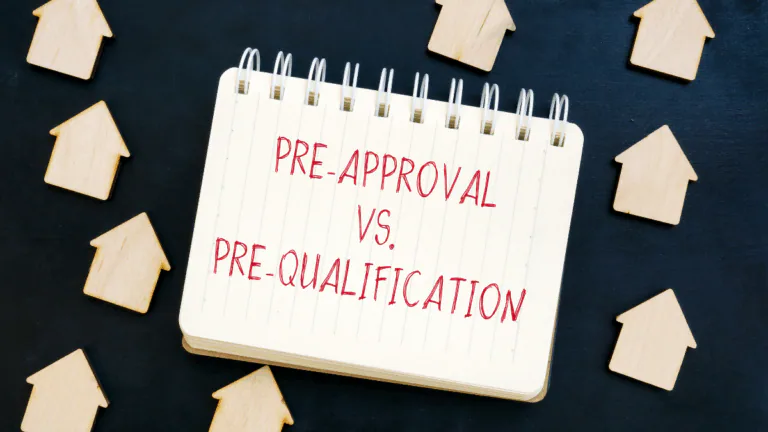
Understand the difference between mortgage pre-approval and pre-qualification. Learn why pre-approval strengthens your offer and helps you compete in today’s market.
Tell us what you are trying to do and we will come back with real numbers: rate, payment, cash to close and how this loan stacks up against the alternatives. No obligation, and no credit pull until you ask for one.
CPF Mortgage
10710 FL-54 c101
Trinity, FL 34655
(727) 226-1040
Licensed mortgage lender and broker in Florida, Tennessee, Georgia and Colorado. NMLS 222883.